
Choosing a pre-kindergarten program for your child is a big decision. This is the start of your child’s academic career, and a quality program helps set the foundation for a lifelong love of learning. There are many great programs in South Florida, but the right one may depend on your child’s needs as well as your personal preferences.
Read on to learn some important questions to ask the staff of each program as you make this milestone decision for your child’s future.
Does The School Have A VPK Program?
Voluntary pre-k programs, better known as VPK, help give children a “head start” in their learning and help boost their social skills before starting kindergarten officially. These programs are free for kids at age four, born before September 1st, in the state of Florida, and include 540 hours of instruction, focusing on early literacy.
Provided by the Early Learning Coalition (ELC), children can begin to adjust to the classroom environment in a small class size so they can receive individualized attention from their educators. A school that includes VPK programs is a great option for children who are ready to start learning a new routine and spread their wings.
What Is The Curriculum Framework?
A curriculum is the layout for the type of education children receive, including methodologies used by the teachers. There are two major methods used in pre-kindergarten programs: play-based and academic.
Play-Based Curriculums

Playtime doesn’t sound like something that would be part of an educational system, but it’s actually a vital part of how young children learn. This methodology focuses on exploration as a way of building social, emotional, and cognitive skills.
Children are constantly moving, so this educational style allows them to do what they do best: hands-on activities that are as fun as they are educational. This can include art projects, musical instruments, storytime, and more, rather than sitting and struggling to pay attention for long periods of time.
Play-based curriculums build on natural curiosity and a desire to explore. Creative activities have been shown to foster emotional growth, conflict resolution skills, and the ability to switch tasks without losing focus.
Teachers act as guides by setting up different “stations,” such as a block station, and ask children open-ended questions that encourage them to expand their thinking. This is the start of employing other basic skills, such as literacy and math.
Academic Curriculums

By contrast, academic curriculums involve teacher-led instruction with measurable goals and outcomes, such as good grades. Direct learning styles are useful for learning to read, write, or perform basic math, with more of a structured lesson plan.
Academic curriculums prioritize letter and number recognition, reading, and writing, often incorporating the use of workbooks, flash cards, and group projects. Kids are encouraged to follow simple directions and complete short assignments at tables or desks.
One major benefit of academic curriculums is the clear measure of success by meeting specific goals. The foundation helps prepare children for traditional testing and stricter expectations they can expect in elementary school.
But while the benefits may show in improved test scores, play-based learning shows more benefit in terms of behavioral success. A successful pre-kindergarten program may include both learning styles, known as a “hybrid model.” This methodology combines fun exploratory activities with short, structured assignments.
What Is The Classroom Ratio?
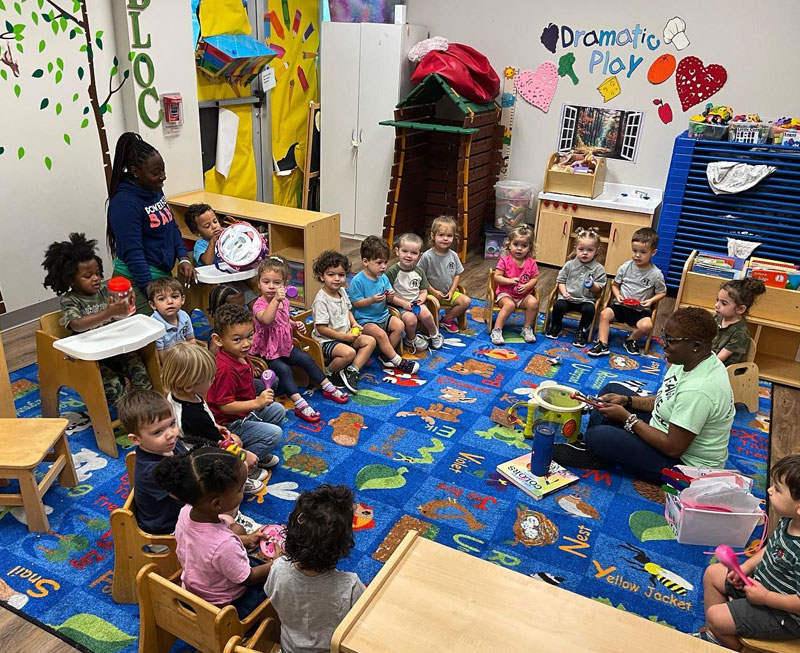
Larger class sizes aren’t inherently bad. However, a smaller class size can allow teachers to focus more on each child individually, should they struggle with reading or writing. The size of each class may be worth asking about depending on the needs of your child.
Does The School Have Aftercare?
This item may be more of a “nice to have” than “need to have” for some families, but for working parents, it’s essential. Kids need a safe place to be in between the end of the school day and the end of the work day. The pre-kindergarten program you choose may be one that offers sports, clubs, or other after school care following end of the school day.
Recognizing Kindergarten-Readiness Markers

The age a child starts kindergarten may vary. Some children may be ready at earlier ages, while others need to wait a year. There’s nothing wrong with this, as each child develops at his or her own pace. Enrolling a child in a pre-kindergarten program before they are ready may not be the best course of action.
Kindergarten readiness has to do with a child’s level of social and emotional independence and self-care practices in addition to academic abilities. Generally speaking, children may be ready for kindergarten if:
- They dress themselves
- They can be apart from caregivers without separation anxiety
- They are potty-trained with minimal accidents or assistance, and know to wash their hands
- They can recognize basic shapes, letters in their name, and count to ten
- They can open food packages in their lunch with minimal assistance
- They can follow basic instructions and manage their impulses on more occasions than not
- They can sit still for up to five minutes
- They can speak in sentences using five or six words, clearly expressing wants and needs
- They can recognize their printed names, hold books upright, and recite the alphabet
- They can hold writing utensils such as crayons, trace objects on paper, and use scissors
Choosing A Quality Pre-Kindergarten Program In South Florida
If your child is ready for kindergarten, a pre-kindergarten program can help them adjust smoothly. Providence Children’s Academy is an early learning center in Coconut Creek that offers VPK programs, after-school care, summer camps, and more.
Ready to give your child a strong foundation for lifelong learning? Learn more about us by calling 954-570-6914 and scheduling a tour today.